


How can the isolation sleeve design of a metal magnetic gear pump balance strength and magnetic permeability to reduce eddy current losses?
Release Time : 2026-04-20
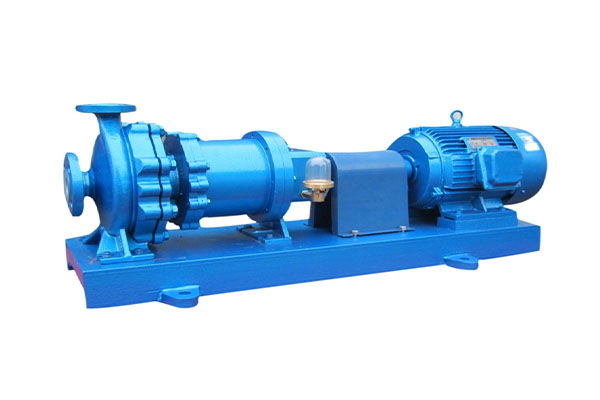
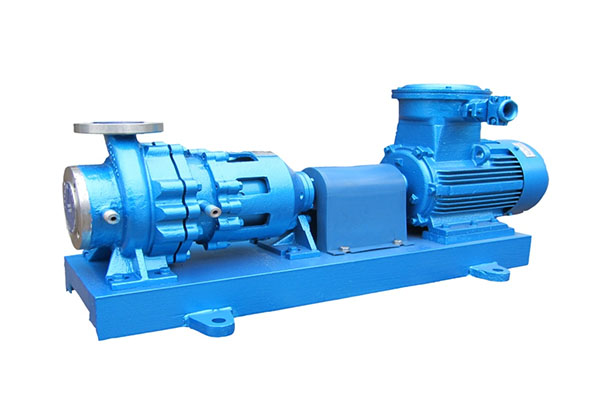
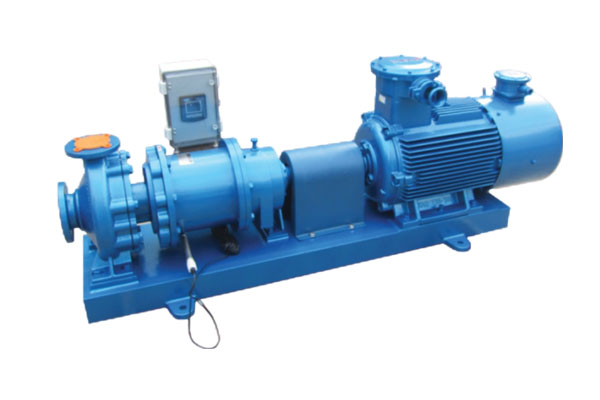
The isolation sleeve of a metal magnetic gear pump, as a key component between the inner and outer magnetic rotors, requires a precise balance between strength, magnetic permeability, and eddy current losses. This balance directly affects the pump's efficiency, reliability, and service life, especially when conveying flammable, explosive, or corrosive media, where the performance of the isolation sleeve is a core factor determining system safety.
From a material selection perspective, the isolation sleeve needs to be made of a high-resistivity, non-ferromagnetic metal to reduce eddy current losses. While traditional stainless steel has high strength, it easily generates significant eddy currents in high-speed alternating magnetic fields, causing energy to be lost as heat and reducing transmission efficiency. Hastelloy and titanium alloys are better choices due to their high resistivity. Hastelloy performs excellently in highly corrosive environments, while titanium alloys, while maintaining corrosion resistance, further improve resistivity through optimized grain structure, reducing eddy current accumulation. Furthermore, the thickness design of the isolation sleeve must balance strength and losses: increasing wall thickness can improve pressure resistance but will expand the eddy current path, exacerbating energy loss; excessively thin walls may deform or even crack due to mechanical stress or thermal expansion. Therefore, finite element analysis is typically used to optimize wall thickness, ensuring that deformation is controlled within a safe range under rated pressure.
Structural optimization is another key aspect of balancing strength and magnetic permeability. Isolation sleeves often employ thin-walled cylindrical structures, with large fillet transitions at the flange-to-cylinder connection to avoid stress concentration. The bottom design often utilizes reverse-locking heads or mushroom-shaped structures, enhancing mechanical strength while reducing bottom thickness and minimizing eddy current generation. For example, the mushroom-shaped bottom increases the gap between the inner magnetic rotor and the end of the isolation sleeve, improving fluid flow paths, preventing cavitation, and reducing wear caused by liquid impact. Furthermore, the inner surface of the isolation sleeve requires precision polishing to reduce surface roughness and decrease fluid friction and eddy current generation.
Magnetic circuit design also significantly impacts isolation sleeve performance. Optimizing the magnetic field distribution of the inner and outer magnetic rotors can reduce the magnetic induction amplitude at the isolation sleeve, thereby reducing eddy current losses. For example, using unequal pole spacing or skewed pole structures makes the magnetic field distribution more uniform on the isolation sleeve surface, avoiding excessively high local magnetic flux density. Simultaneously, rationally controlling the magnetic field alternation frequency prevents high-frequency magnetic fields from exacerbating eddy current effects. In magnetic gear pumps, vibrations generated by gear meshing can affect magnetic field stability. Therefore, dynamic balancing design is necessary to reduce the impact of vibration on the isolation sleeve.
Cooling system design is crucial for ensuring the long-term stable operation of the isolation sleeve. If the heat generated by eddy currents cannot be dissipated in time, the isolation sleeve temperature will rise, potentially leading to demagnetization of the permanent magnet or a decline in material properties. Therefore, a suitable cooling channel must be designed based on the pump's speed and power. Low-speed pumps can dissipate heat through natural convection, medium-speed pumps use heat sinks or external rotor ventilation holes to enhance convection, and high-speed pumps require a forced cooling system, such as external or internal circulating coolant, to ensure the isolation sleeve temperature remains within a safe range.
The manufacturing process significantly impacts the isolation sleeve's performance. Precision casting or forging processes ensure fine and uniform material grains, improving resistivity and mechanical strength. Strict control of dimensional and positional tolerances is essential during machining to prevent magnetic field leakage or increased mechanical friction due to excessive assembly clearances. Furthermore, the gap between the isolation sleeve and the inner magnetic rotor must be precisely adjusted, with unilateral gap non-uniformity controlled to a minimum to ensure efficient magnetic field transmission and stable operation. The design of the isolation sleeve in a metal magnetic gear pump is a complex systems engineering project involving materials science, electromagnetics, fluid mechanics, and mechanical engineering. Through material optimization, structural innovation, magnetic circuit adjustment, enhanced cooling, and improved manufacturing precision, the strength of the isolation sleeve can be ensured while minimizing eddy current losses, achieving efficient, reliable, and safe media transport. This design concept is not only applicable to metal magnetic gear pumps but also provides important reference for the development of other magnetically driven equipment.