
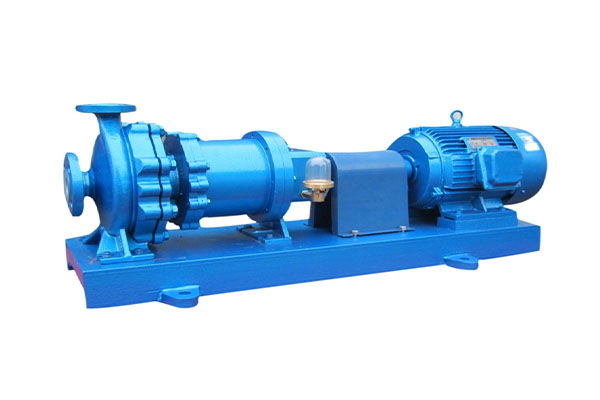
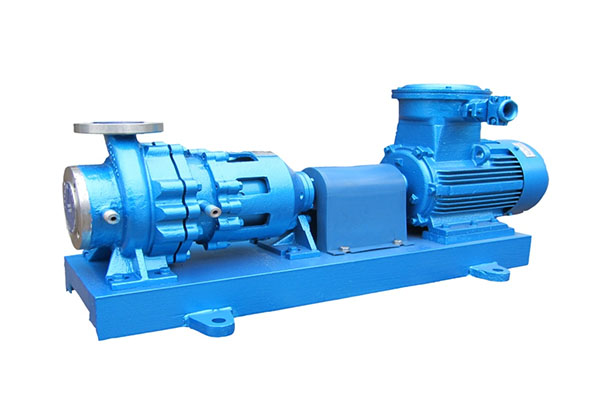
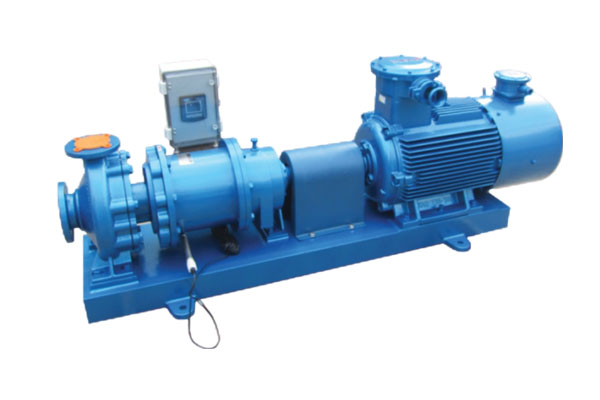


How can the stable operation of gears and magnetic components be ensured in a metal magnetic gear pump under high-temperature conditions?
Release Time : 2026-02-09
In high-temperature operation, the stability of gears and magnetic components in a metal magnetic gear pump directly determines the equipment's lifespan and process safety. High temperatures present multiple challenges, including material thermal expansion, magnetic attenuation, and lubrication failure. Therefore, a comprehensive support system must be built, encompassing material selection, structural design, cooling systems, dynamic compensation, and operation and maintenance, to ensure the pump operates stably under extreme conditions.
Gears, as the core transmission component, require materials that balance high-temperature resistance and thermal fatigue resistance. Traditional metal gears are prone to changes in meshing clearance at high temperatures due to differences in thermal expansion coefficients, leading to jamming or leakage. Therefore, high-nickel alloys, cobalt-based alloys, or ceramic composite materials should be prioritized for high-temperature operation. These materials not only possess excellent thermal stability but also maintain a low coefficient of friction at high temperatures, reducing gear wear. Simultaneously, a hard coating should be formed on the gear surface using laser cladding or chemical vapor deposition techniques to further enhance wear resistance and anti-galling capabilities, preventing softening or adhesive wear of the gear surface due to high temperatures.
The stability of the magnetic transmission components depends on the temperature resistance of the permanent magnet material and the rationality of the magnetic circuit design. Ordinary neodymium iron boron permanent magnets are prone to irreversible demagnetization at high temperatures, while samarium cobalt permanent magnets, although exhibiting superior temperature resistance, are more expensive. Therefore, it is necessary to select appropriate magnetic materials based on the operating temperature range and reduce leakage flux and eddy current losses by optimizing the magnetic circuit structure. For example, using skewed pole or Halbach array designs can enhance magnetic field uniformity and reduce magnetic energy loss at high temperatures. Furthermore, the isolation sleeve, as a critical barrier between the magnetic drive and the medium, must be made of high-temperature and corrosion-resistant materials such as Hastelloy or titanium alloys, and its thin-walled design should reduce eddy current heating effects to prevent magnetic drive failure due to localized overheating.
The design of the cooling system is crucial for ensuring high-temperature operation. During operation, the annular gap between the inner magnetic rotor and the isolation sleeve generates a large amount of heat due to eddy currents. Insufficient cooling can cause the medium temperature to exceed the permanent magnet's operating limit, leading to a risk of demagnetization. Therefore, a cooling jacket must be installed on the outer surface of the isolation sleeve, using a circulating coolant (such as heat transfer oil or water-based coolant) to remove heat. For ultra-high temperature conditions (e.g., exceeding 300℃), a heat exchanger needs to be integrated into the pump body structure to pre-cool the medium and prevent direct impact from the high-temperature medium on the magnetic components. Simultaneously, the cooling system must be equipped with temperature sensors and alarm devices to monitor the temperature rise in the annular gap area in real time, ensuring the temperature is controlled within a safe range.
Dynamic compensation technology can effectively address thermal deformation issues at high temperatures. Due to the different coefficients of thermal expansion of gears, bearings, and the pump body at high temperatures, traditional fixed-clearance designs are prone to jamming or leakage. By introducing elastic magnetic rings or hydraulic balancing devices, automatic adjustment of axial and radial clearances can be achieved. For example, elastic magnetic rings can adjust the magnetic gap according to temperature changes to ensure magnetic transmission efficiency; hydraulic balancing devices dynamically compensate for thermal expansion through a pressure feedback mechanism to maintain gear meshing accuracy. Such technologies can significantly improve the pump body's adaptability and stability under high-temperature conditions.
Operation and maintenance strategies need to be optimized for high-temperature conditions. Before startup, the pump body must be preheated to prevent thermal stress cracking caused by contact between the low-temperature medium and high-temperature components. During operation, the flow and pressure of the cooling system must be checked regularly to prevent coolant vaporization or blockage. After shutdown, the pump must be cooled slowly to prevent structural deformation due to thermal expansion and contraction. Furthermore, a preventative maintenance plan should be established, regularly checking the residual magnetism of the permanent magnet, gear wear, and the integrity of the isolation sleeve, and promptly replacing aging components to avoid sudden failures.
The stable operation of a metal magnetic gear pump under high-temperature conditions requires a multi-dimensional approach involving material upgrades, structural optimization, enhanced cooling, dynamic compensation, and scientific maintenance. These measures not only extend equipment life but also reduce leakage risks, providing reliable protection for high-temperature processes in chemical, metallurgical, and energy industries.