
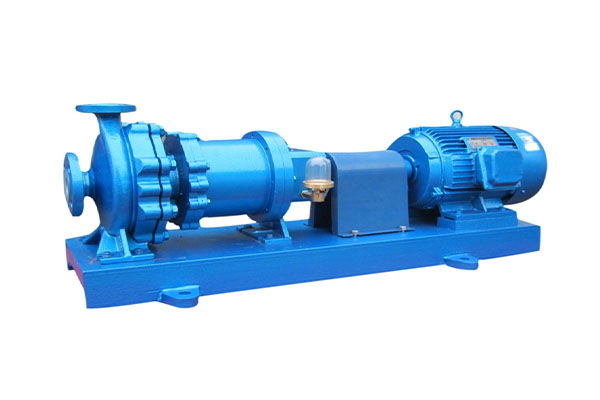
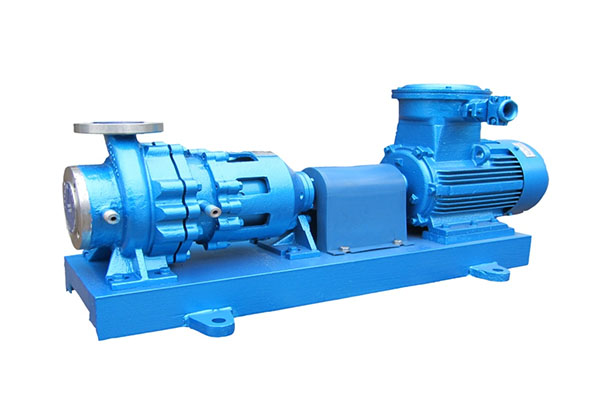
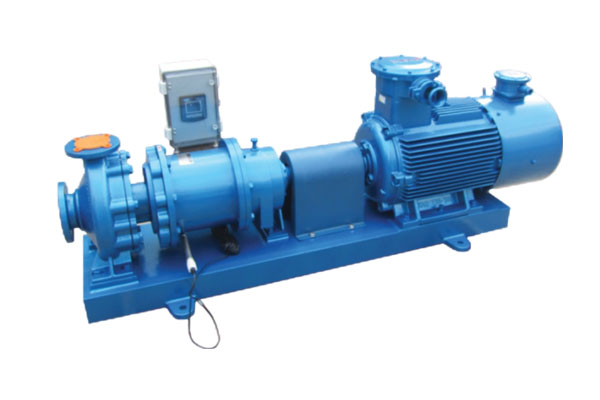


How does the IMC metal magnetic split flow pump, employing a double-layer cover and double-support structure, achieve superior axial stability and sealing reliability under high-load conditions?
Release Time : 2026-05-06
In industrial fluid transportation, the stability and sealing reliability of the equipment structure are key factors determining operational safety and lifespan. For the IMC metal magnetic split flow pump, facing high loads, high pressures, and complex media environments, its double-layer cover and double-support structure, much like a precision control system, achieves a comprehensive improvement in axial stability and sealing performance through structural synergistic optimization.
1. Double-layer cover structure strengthens the overall rigidity foundation
The core of the double-layer cover design lies in increasing the overall rigidity of the pump body at both ends by adding structural layers. Under high-load conditions, a single-layer cover is prone to slight deformation due to uneven stress, thus affecting the coaxiality of the internal rotor system. The double-layer structure, by dispersing stress, rationally transfers the load to the outer casing, effectively reducing local stress concentration. This structure is similar to a "reinforced frame," providing a more stable operating foundation for internal rotating components.
2. Optimized Axial Stress Distribution through Dual Support System
Dual support structures typically consist of front and rear bearings or multi-point support systems, providing multi-dimensional constraint on the rotor shaft. Under high loads, axial and radial forces often coexist. Insufficient support can easily lead to shaft misalignment or increased vibration. Dual support distributes the shaft stress across multiple support points, ensuring it remains aligned with the designed axis, significantly improving axial stability and reducing the risk of mechanical wear.
3. Structural Synergy Reduces Vibration and Misalignment Impacts
The double-layer cover and dual support do not function independently but synergistically. The cover provides rigid constraint, while the support system provides dynamic stability. Together, they effectively suppress vibration and axial movement under high load conditions. This synergistic mechanism allows the pump to maintain stable operation even under complex conditions, reducing seal failures caused by structural instability at the source.
4. Enhanced Reliability of the Sealing System
In magnetic pumps, although a non-contact sealing structure is used, axial stability still directly affects sealing performance. Rotor misalignment can lead to uneven stress on the isolation sleeve, even resulting in localized wear or fatigue failure. The double-layer cover and double support stabilize the rotor position, ensuring uniform gap between the inner and outer magnetic rotors, thus maintaining magnetic force transmission efficiency and ensuring the isolation sleeve remains within a safe stress range over the long term.
5. Adapting to Long-Term Operation Requirements Under High Loads and Complex Conditions
In high-temperature, high-pressure, or highly corrosive media environments, the equipment structure must not only withstand mechanical loads but also cope with the effects of changes in material properties. The double-layer cover acts as a thermal deformation buffer, while the double support provides stable support even when material properties fluctuate, giving the overall system stronger environmental adaptability. This design concept effectively extends equipment lifespan and reduces maintenance frequency.
In summary, the IMC metal magnetic split flow pump, through the synergistic design of the double-layer cover and double support structure, achieves comprehensive optimization from structural rigidity and stress distribution to dynamic stability. Under high-load conditions, this design not only improves axial stability but also provides reliable protection for the sealing system, thereby ensuring safe, efficient, and long-term operation of the equipment.
1. Double-layer cover structure strengthens the overall rigidity foundation
The core of the double-layer cover design lies in increasing the overall rigidity of the pump body at both ends by adding structural layers. Under high-load conditions, a single-layer cover is prone to slight deformation due to uneven stress, thus affecting the coaxiality of the internal rotor system. The double-layer structure, by dispersing stress, rationally transfers the load to the outer casing, effectively reducing local stress concentration. This structure is similar to a "reinforced frame," providing a more stable operating foundation for internal rotating components.
2. Optimized Axial Stress Distribution through Dual Support System
Dual support structures typically consist of front and rear bearings or multi-point support systems, providing multi-dimensional constraint on the rotor shaft. Under high loads, axial and radial forces often coexist. Insufficient support can easily lead to shaft misalignment or increased vibration. Dual support distributes the shaft stress across multiple support points, ensuring it remains aligned with the designed axis, significantly improving axial stability and reducing the risk of mechanical wear.
3. Structural Synergy Reduces Vibration and Misalignment Impacts
The double-layer cover and dual support do not function independently but synergistically. The cover provides rigid constraint, while the support system provides dynamic stability. Together, they effectively suppress vibration and axial movement under high load conditions. This synergistic mechanism allows the pump to maintain stable operation even under complex conditions, reducing seal failures caused by structural instability at the source.
4. Enhanced Reliability of the Sealing System
In magnetic pumps, although a non-contact sealing structure is used, axial stability still directly affects sealing performance. Rotor misalignment can lead to uneven stress on the isolation sleeve, even resulting in localized wear or fatigue failure. The double-layer cover and double support stabilize the rotor position, ensuring uniform gap between the inner and outer magnetic rotors, thus maintaining magnetic force transmission efficiency and ensuring the isolation sleeve remains within a safe stress range over the long term.
5. Adapting to Long-Term Operation Requirements Under High Loads and Complex Conditions
In high-temperature, high-pressure, or highly corrosive media environments, the equipment structure must not only withstand mechanical loads but also cope with the effects of changes in material properties. The double-layer cover acts as a thermal deformation buffer, while the double support provides stable support even when material properties fluctuate, giving the overall system stronger environmental adaptability. This design concept effectively extends equipment lifespan and reduces maintenance frequency.
In summary, the IMC metal magnetic split flow pump, through the synergistic design of the double-layer cover and double support structure, achieves comprehensive optimization from structural rigidity and stress distribution to dynamic stability. Under high-load conditions, this design not only improves axial stability but also provides reliable protection for the sealing system, thereby ensuring safe, efficient, and long-term operation of the equipment.